I’m Edward Wang, an interdisciplinary visual and product designer based in New York City.
Selected Works About Me Contact
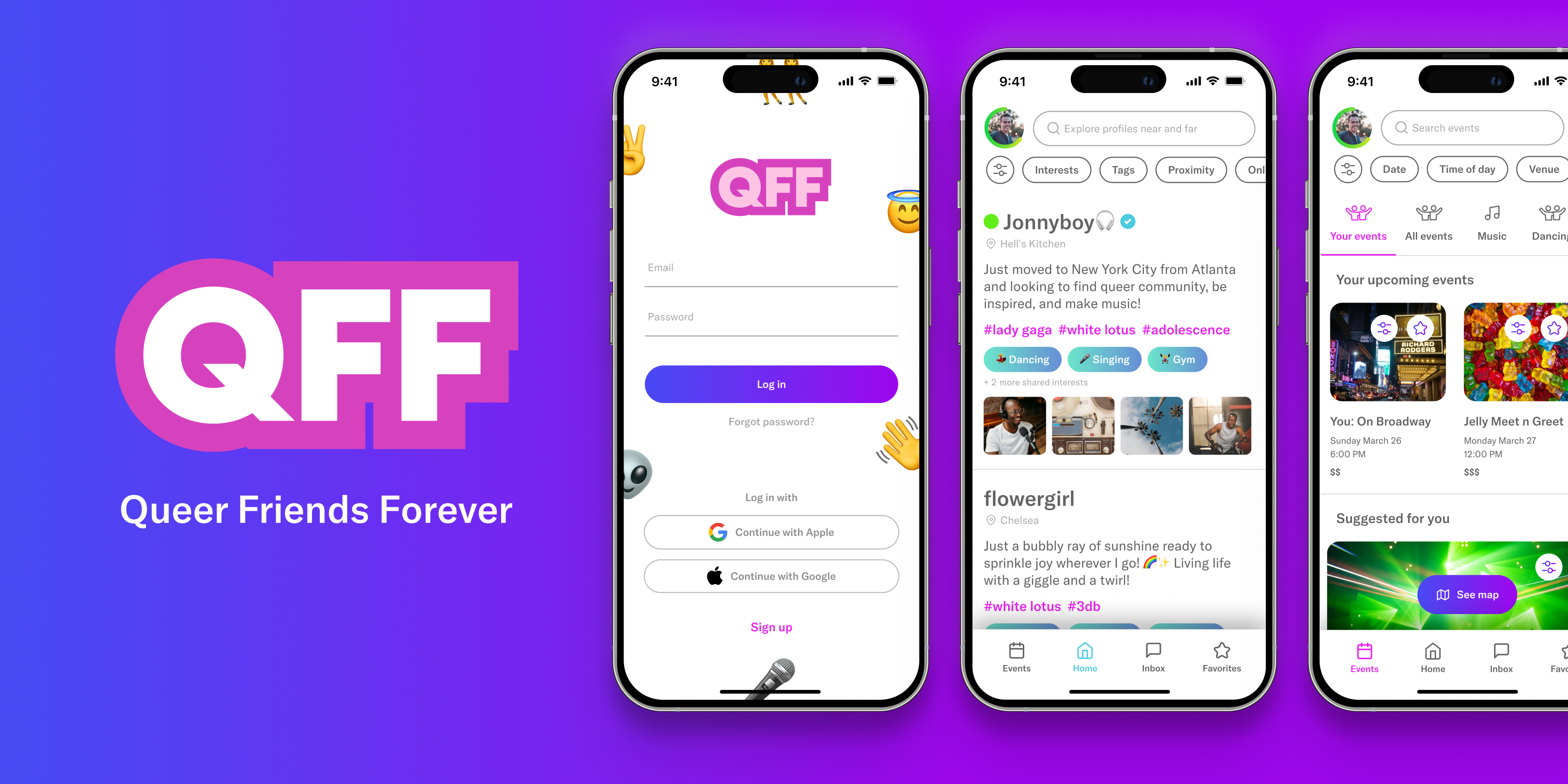
QFF 1 2

Queer Friends Forever

Project Overview
Designing a friendship platform for queer people seeking connection beyond nightlife and hookup culture
6 years ago when I moved to New York City to study and live my best gay life, I imagined that making friends in the Big Apple — one of the densest metropolitan cities with one of the biggest queer populations — wouldn’t be a challenge.

And yet, I struggled navigating friendship and heard many stories from others struggling in their search for friendship in the queer community.
Project Objective
Design a mobile app concept focused on helping LGBTQ+ people build meaningful, long-term friendships through intentional social matching.
QFF 2

Project Disciplines
Visual Identity
UI/UX Design
Product Design

Skills
UI Design
UX Research
Visual Design
Design Systems
Prototyping

Tools
Figma
FigJam
Figma Slides

RESEARCH GOALS
Understand barriers to queer friendship
Evaluate shortcomings of existing apps
Identify behaviors that foster long-term connection
Defining the Problem
Through interviews and research, I discovered that existing social platforms often optimize for attraction and immediacy — not compatibility, safety, or long-term connection.
Methods
Competitive Analysis
5 Qualitative User Interviews
Affinity Mapping
Competitive Analysis

Friendship Apps

Bumble BFF Collective

Social Media Apps

X Facebook Instagram

Hookup Apps

Grindr Scruff

Event Based Apps

Timeleft Meetup Eventbrite

Dating Apps

Hinge Feeld Tinder Bumble
Affinity Mapping Data

Existing queer apps prioritize attraction over compatibility

Users associated many LGBTQ+ apps with hookup culture, making friendship-seeking feel uncomfortable or performative.
Shared interests build safer conversations

Interviewees consistently wanted easier ways to connect through hobbies and identity, rather than appearance.

Maintaining friendship mattered as much as meeting people

Users wanted support for sustaining relationships after initial connection.

Refined Problem Statement
How might we help LGBTQ+ people form meaningful and lasting friendships in ways that feel safer, more intentional, and less performative than existing social apps?
Designing the Solution
Defining the User
Designing a solution for the intended user required building a user persona that represented the behaviours, goals, and pain points of the imagined user through data points collected from my 5 interviewees.

This user persona was then used to walkthrough a potential user’s journey through the app, and more specifically, user flows to help delineate specific tasks and features that would facilitate the user reaching their goal — finding compatible, long-lasting queer friendship — on the app.
User Persona
🧚

Jordan

27
he/they
Book Editor
Queens, NY

Behaviors

🏡

An introvert and homebody

🎹

Busy after work on the weekdays, invested in his hobbies

😇

A conscious consumer

Goals

🫶

Build a close knit friend group

🇵🇭

Bond with friends over shared interests and identity

🏳️‍🌈

Form a network of diverse friends

Pain Points

⏰

Difficult to find time

🧠

Body image, neurodivergence, and sobriety

🧩

Improve relationships all around

User Journey

Opportunity Areas

Scenario Goal

Discovery

Users needed reassurance that the platform prioritized friendship over dating culture.

Profile Creation

Users wanted nuanced identity expression without emphasizing physical appearance.

Matching

Compatibility based on interests felt more meaningful than proximity alone.

Retention

People wanted tools that encouraged sustained interaction after matching.

Jordan befriends a queer person he feels compatible with
Planning the Information Architecture
Given the time constraint to design the end-to-end application within 12 weeks, organizing an application map and ordering the prioritization of app features through an impact versus effort matrix was crucial to designing an MVP of QFF.
Application Mapping

Click any purple window with a + / - marker to expand or collapse its branch.
Sign In/Sign Up
Home
Profile Attributes
Age
Gender
Race
Intention
Interests
Relationship status
Age
Gender
Race
Intention
Interests
Relationship status
Actions
Send tap
Send message
Search by location
Event Attributes
Interest
Open to (Gender/Sexuality/Race)
Location
Price Range
Event Attributes
Cover photo
Event name
Date, time
Location
Interest tags
Price range
Open to (Gender/Sexuality/Race)
Event description
External link
Organizer
Attendance
Chat with group
Upcoming/Saved events
Search
Events chat
Chat functionalities
Text input
Voice note
Photos
Send location
Saved phrases
Prompts
Video call
Profile Attributes
Photos
Name
Age
Zodiac
Gender
Sexuality
Relationship Status
Distance, Location
Bio/Prompts
Race
Intention
Interests
Other biographical info
Account
Notifications
Security and Privacy
About
Feature Prioritization
High impact
Low impact
Low effort
High effort
Highlight the features of the app that optimize for compatibility, rather than being an app simply setting up strangers to meet.
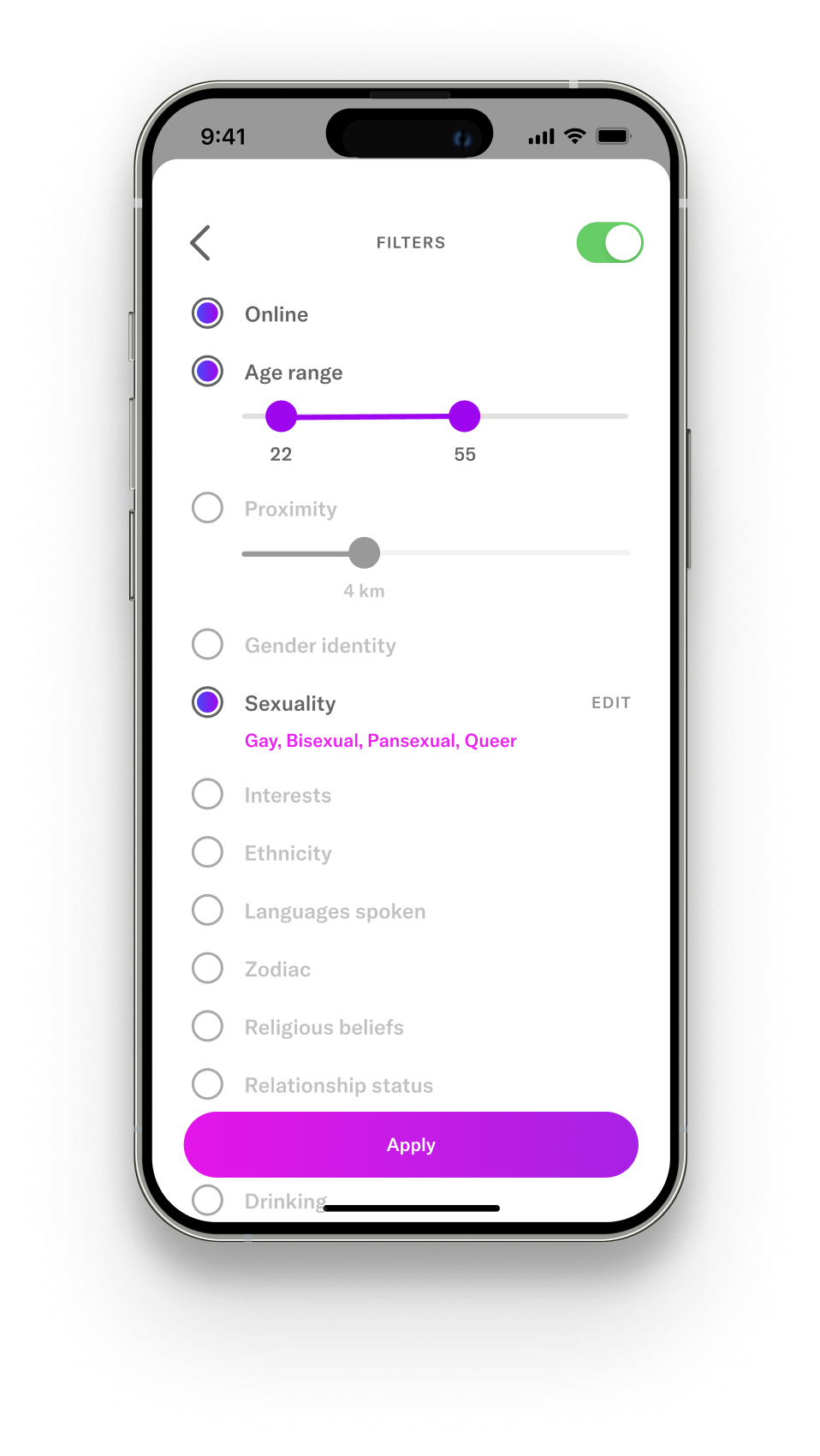
Ability to filter by interests and demographics (age, location, race, gender identity, sexuality)
Include standard biographical information such as name, age, gender identity, sexuality, location, possibly zodiac, race, pets, alcohol/smoking/substance use
He may want to evaluate his interaction with the person, to inform the algorithm on compatibility
No input fields for physical traits, and discourage users from including them in their bios
Suggestions or notifications for checking in, message prior chats, screenshots play, to encourage continued interactions
He may want to be able to comment on certain parts of the profile (e.g. pictures, prompt responses, etc.)
Suggestions for friendlies based on shared interests
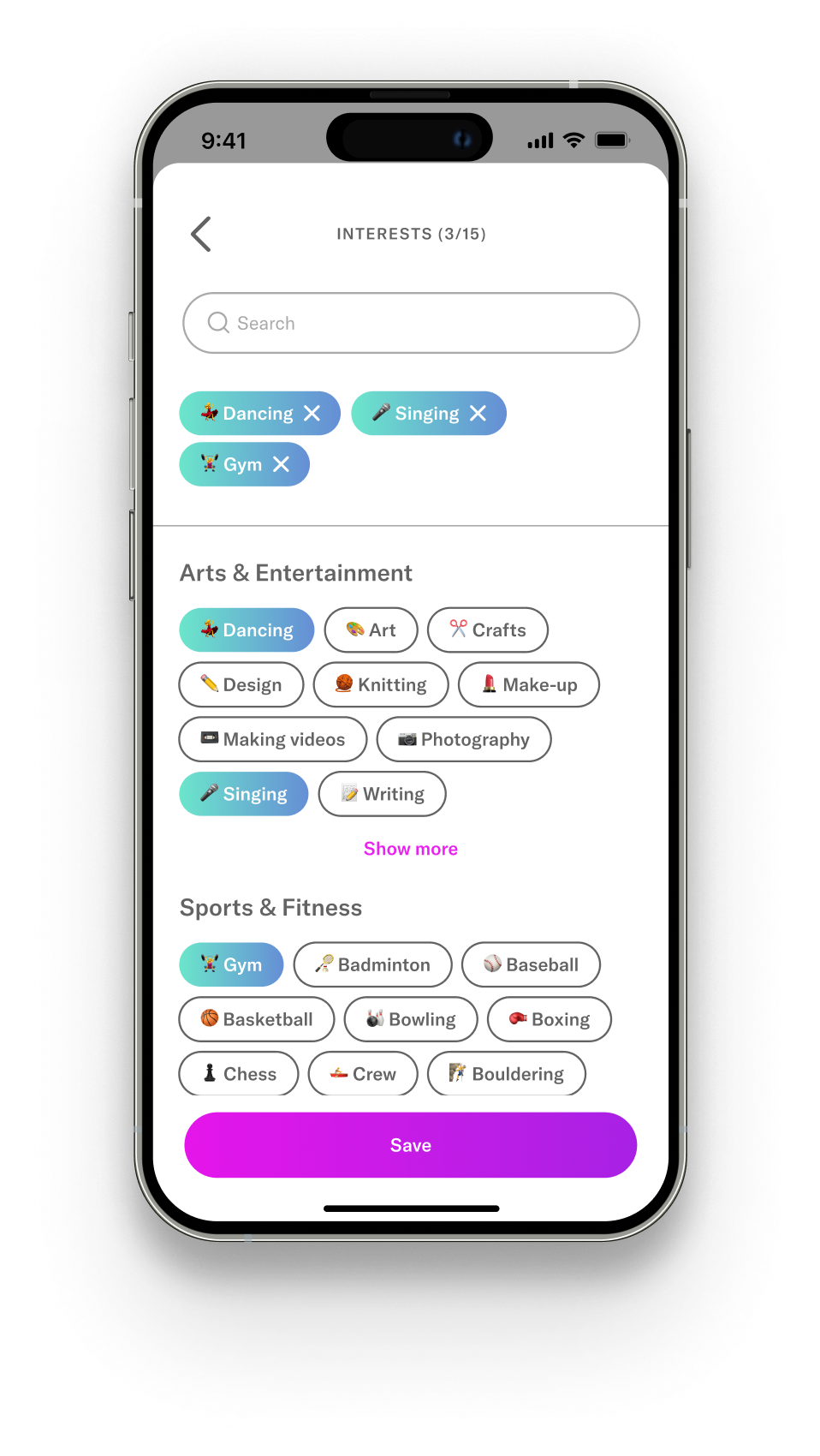
Add tags for a wide range of interests, activities, hobbies
The branding, marketing, and messaging should explicitly state its mission as a way to make friends within the queer community
*Potentially an events page, in addition to the profiles, to find new friends at events
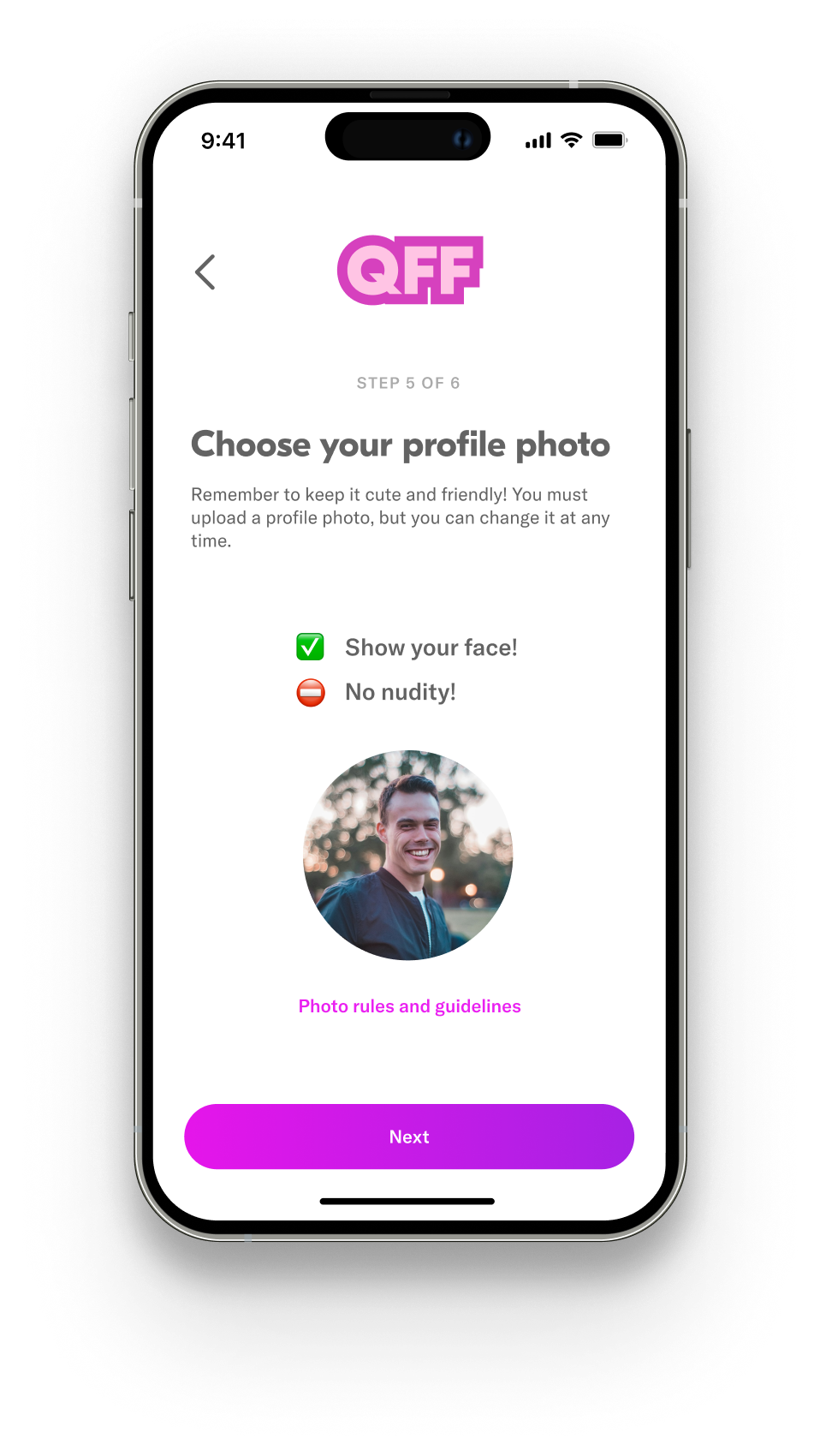
Selected profile picture must be verified and comply with guidelines to ensure appropriateness
Suggest prompts to fill out bio with textual answers, videos, voice notes, etc.
*Potentially the app partly functions as a social media profile as well, encouraging people to consistently and periodically update/add new photos, prompt responses to create a feed for users to check on
Designing for Friendship, Not Attraction
One of the strongest insights from research was that participants felt existing queer apps were optimized for attraction rather than friendship.

Many users associated LGBTQ+ social platforms with hookup culture, making it difficult to signal genuine intentions and find platonic connections.

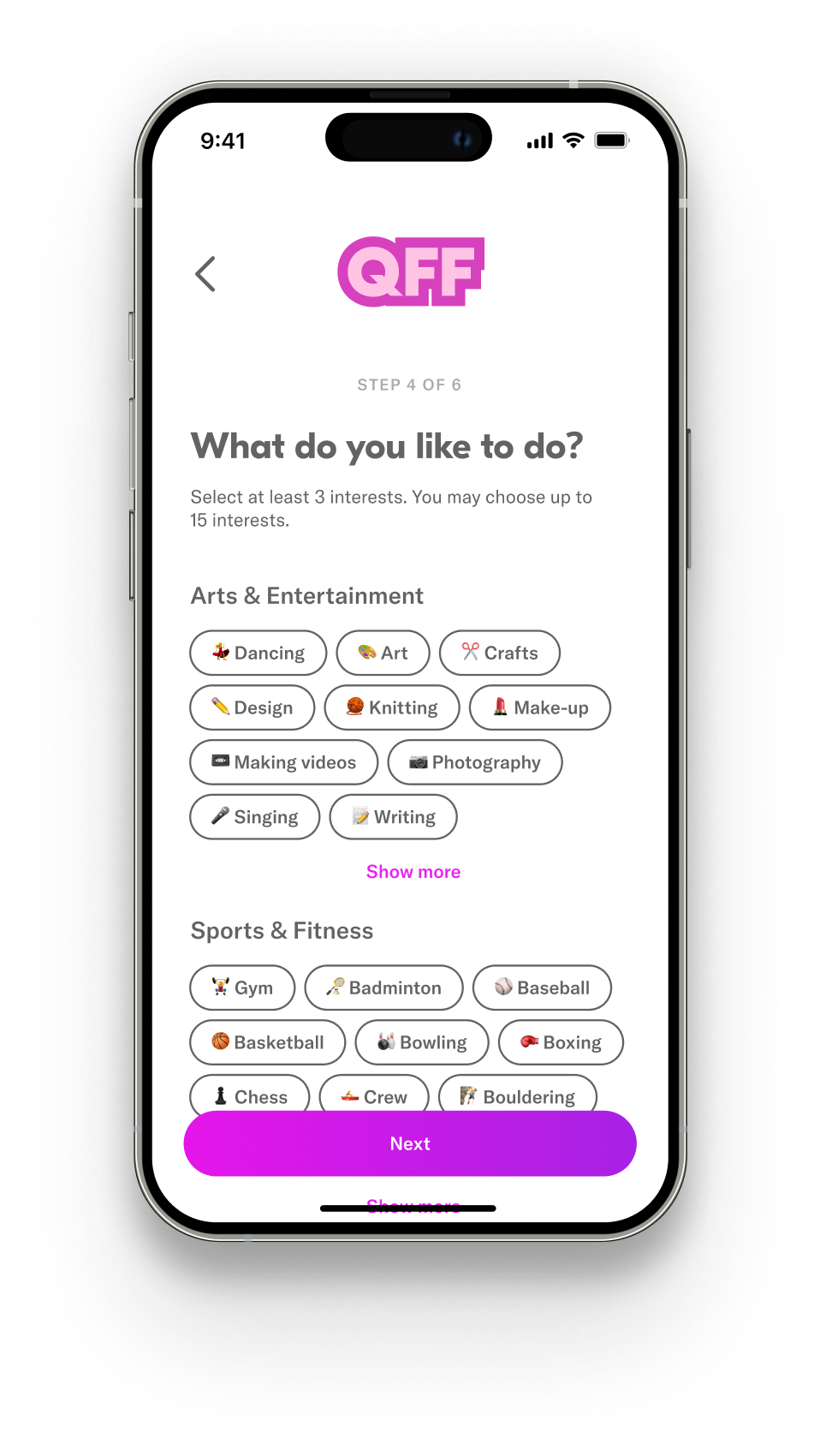
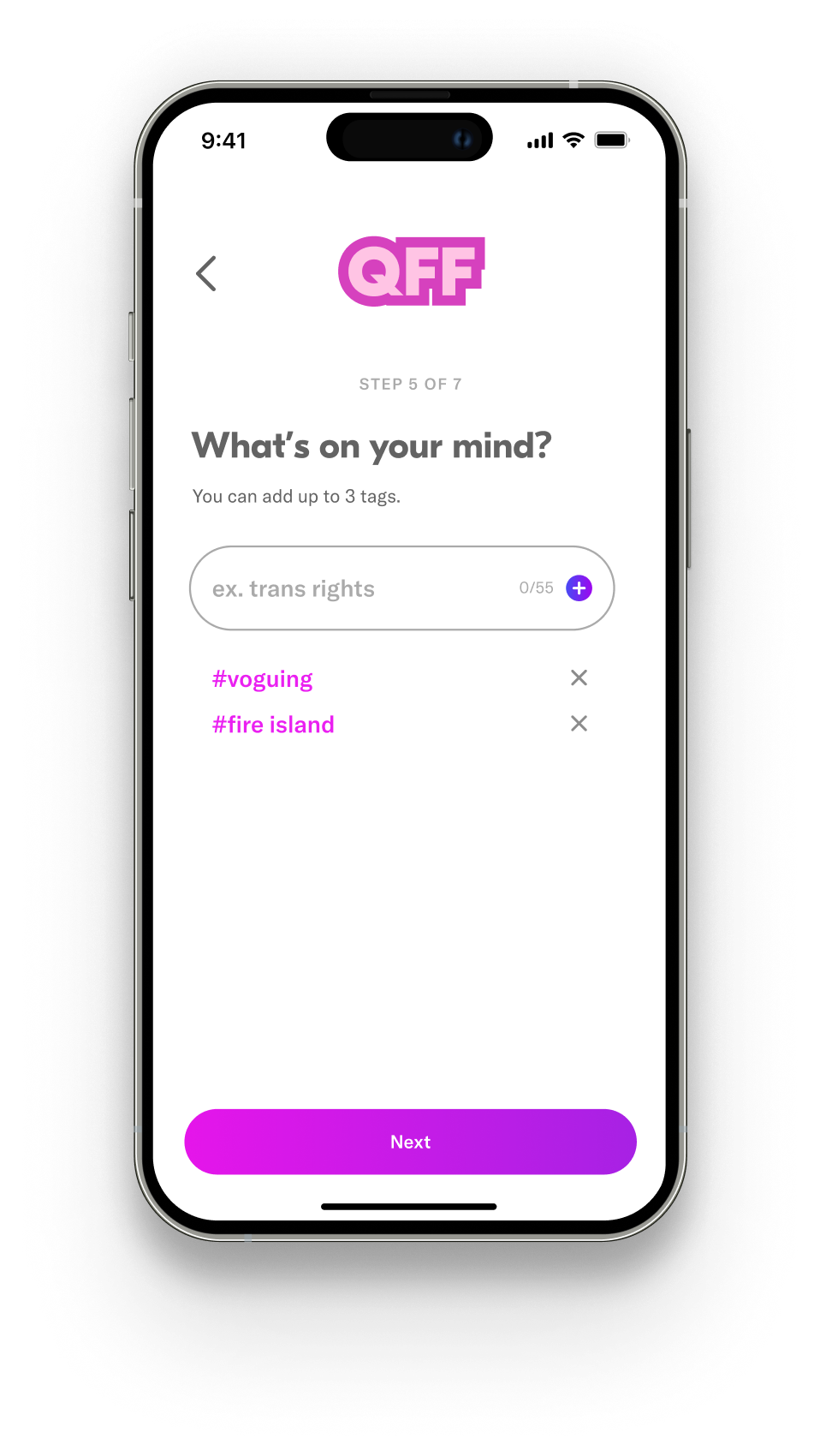
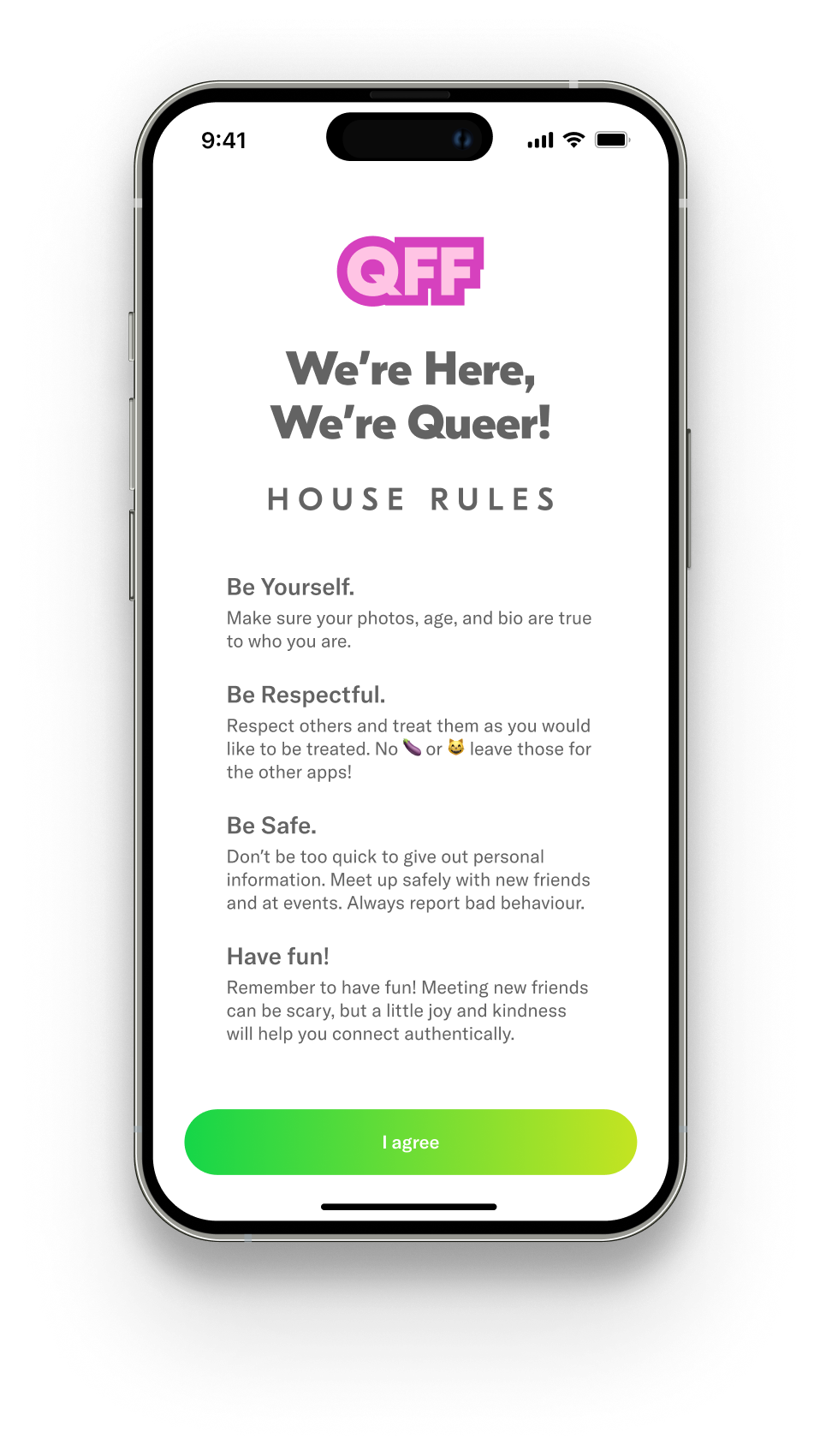
As a result, I focused the onboarding experience on helping users express identity, values, and interests without emphasizing physical appearance. The onboarding flow also introduces community guidelines early in the experience, establishing expectations around safety, respect, and consent.
House Rules screen
House Rules
Interest Selection screen
Interest Selection
Profile Creation screen
Profile Creation
Photo Guidelines screen
Photo Guidelines
By shifting attention away from appearance and toward shared experiences, the onboarding process establishes a clear social contract: QFF is a platform for meaningful friendship rather than dating.
Matching Through Shared Interests
Research revealed that compatibility mattered more than proximity.

Participants consistently expressed a desire to connect through shared interests and lifestyles rather than relying on appearance-based matching systems.

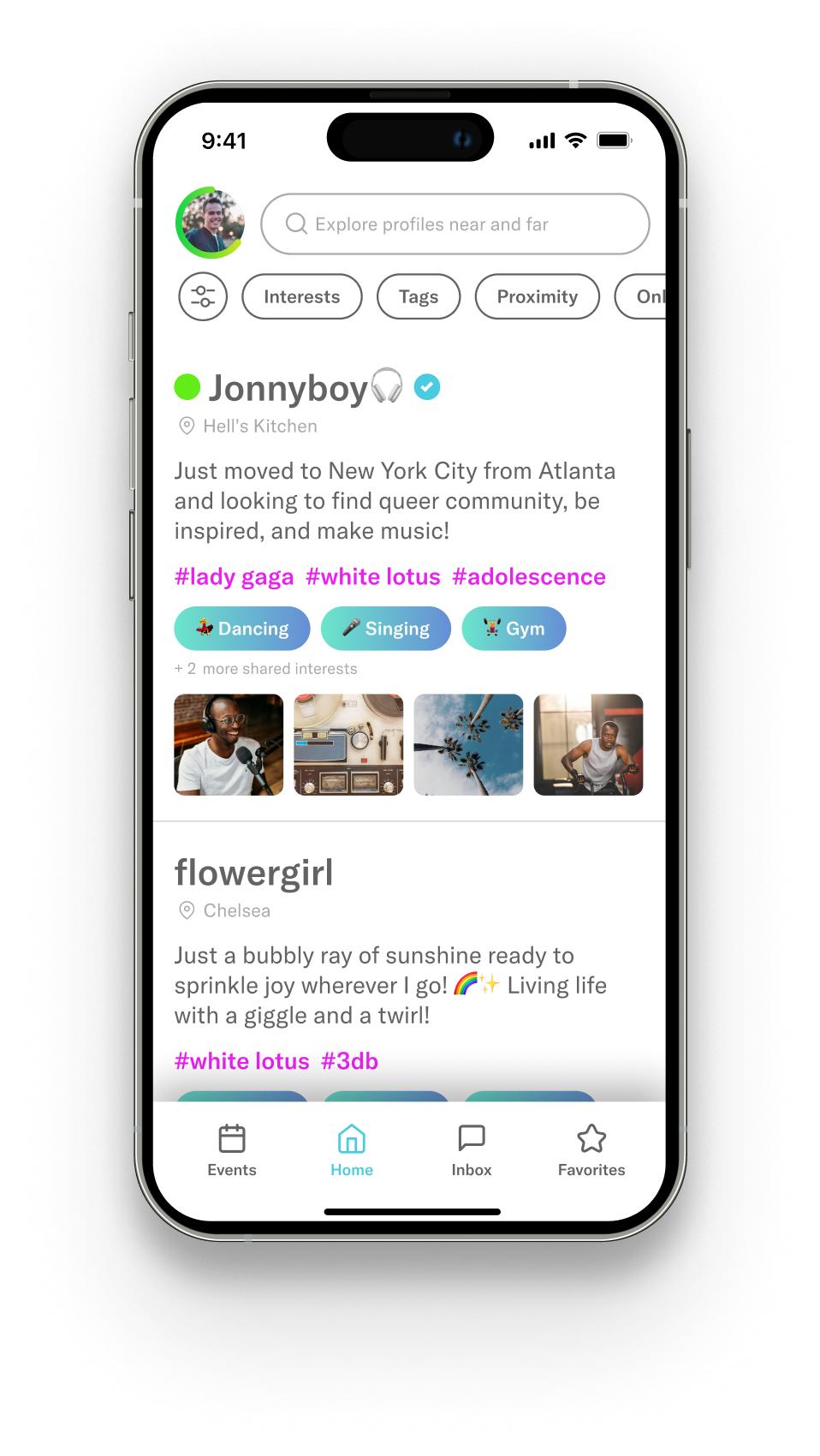
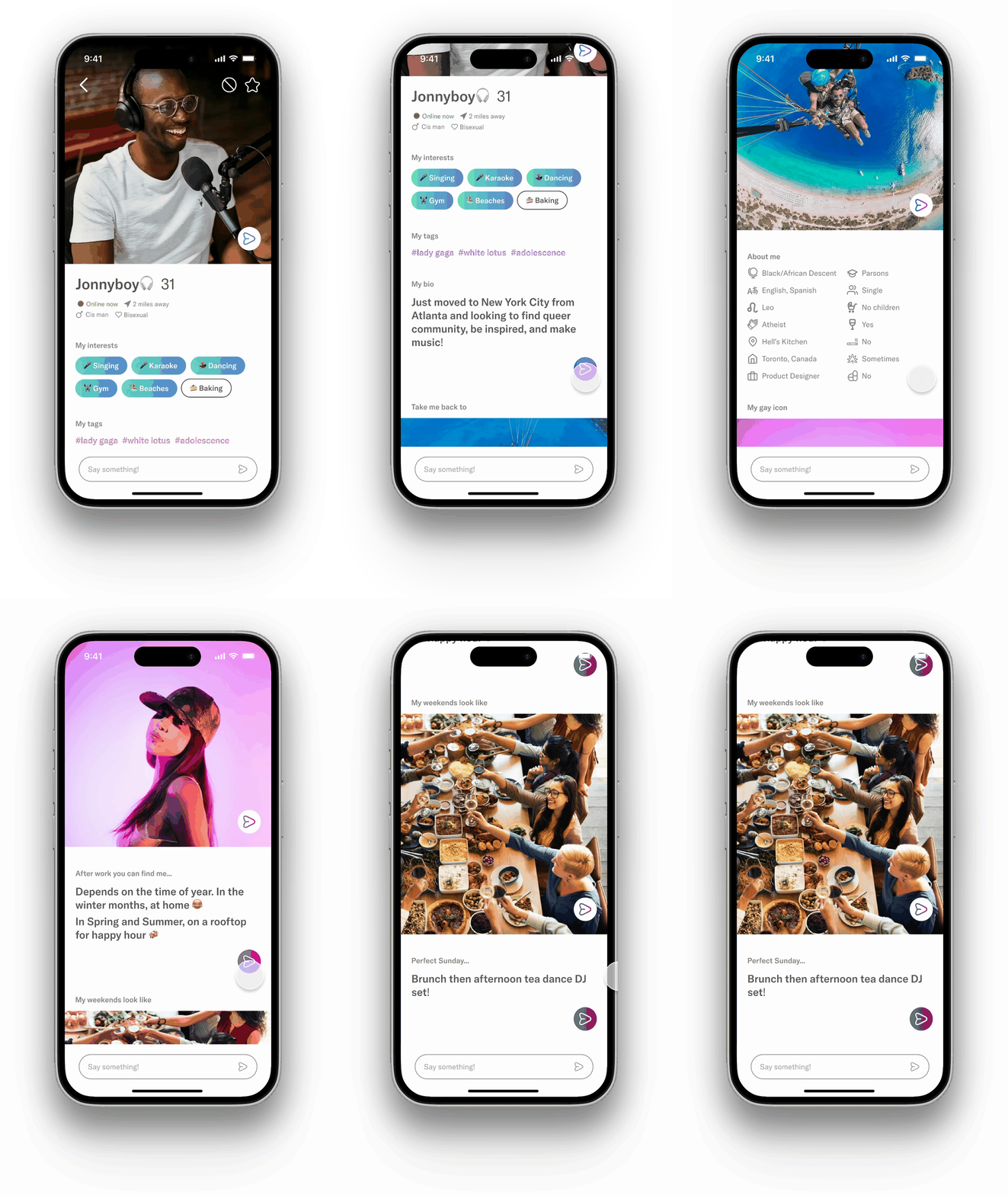
Thus, I designed the browsing experience around mutual interests rather than appearance, where each profile highlights shared interests, overlapping hobbies, personal identity information, and lifestyle compatibility — instead of leading with photos alone.
Browse screen
Browse
Profile Details screen
Profile Details
Filters screen
Filters
Profile Compatibility screen
Profile Compatibility
Rather than encouraging users to rapidly evaluate strangers, the browsing experience creates more meaningful entry points for conversation and connection.
Building Community Through Events
While interviews highlighted challenges around meeting people, participants also described difficulties maintaining friendships over time.

Many wanted lower-pressure ways to meet new people beyond one-on-one interactions.

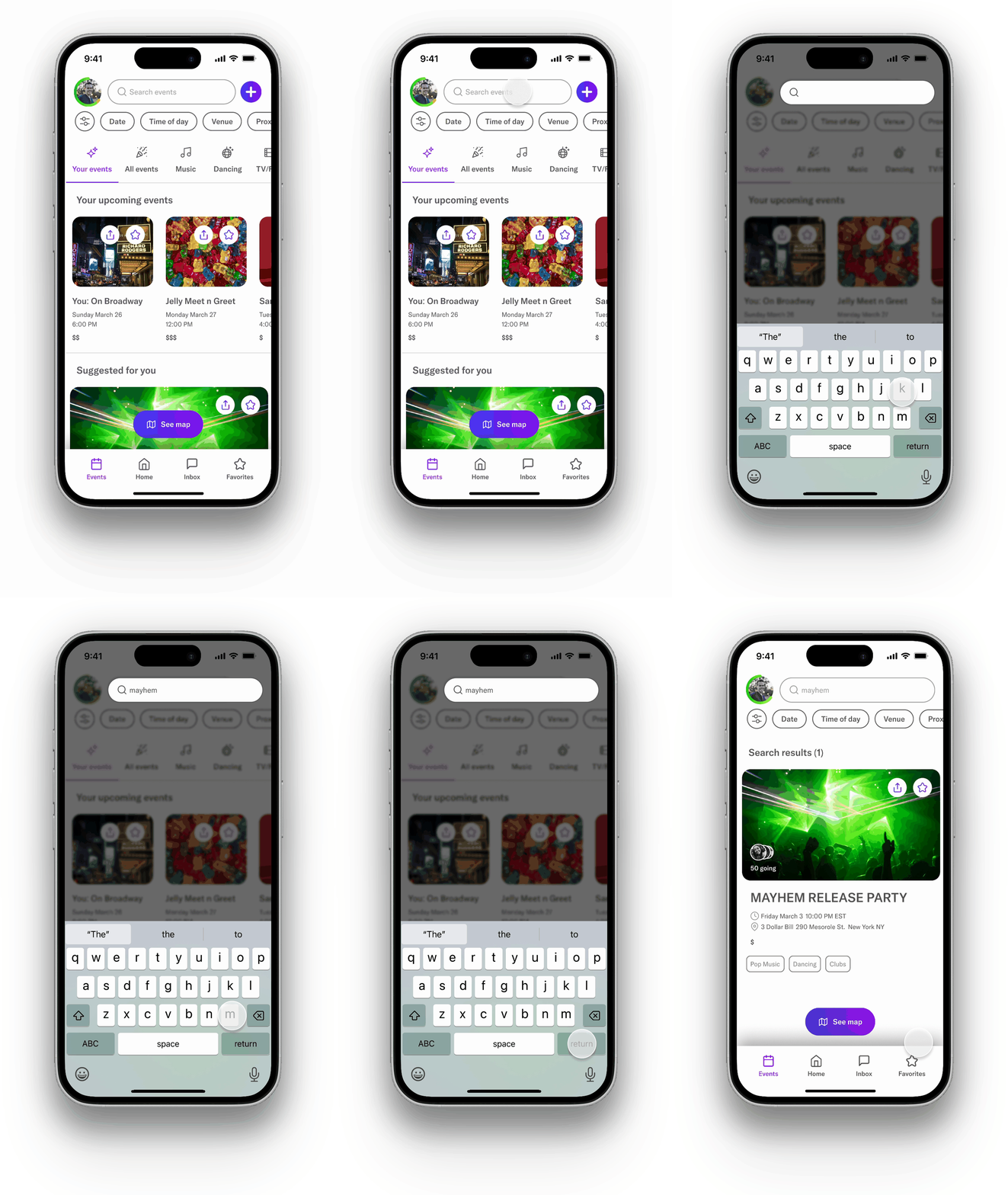
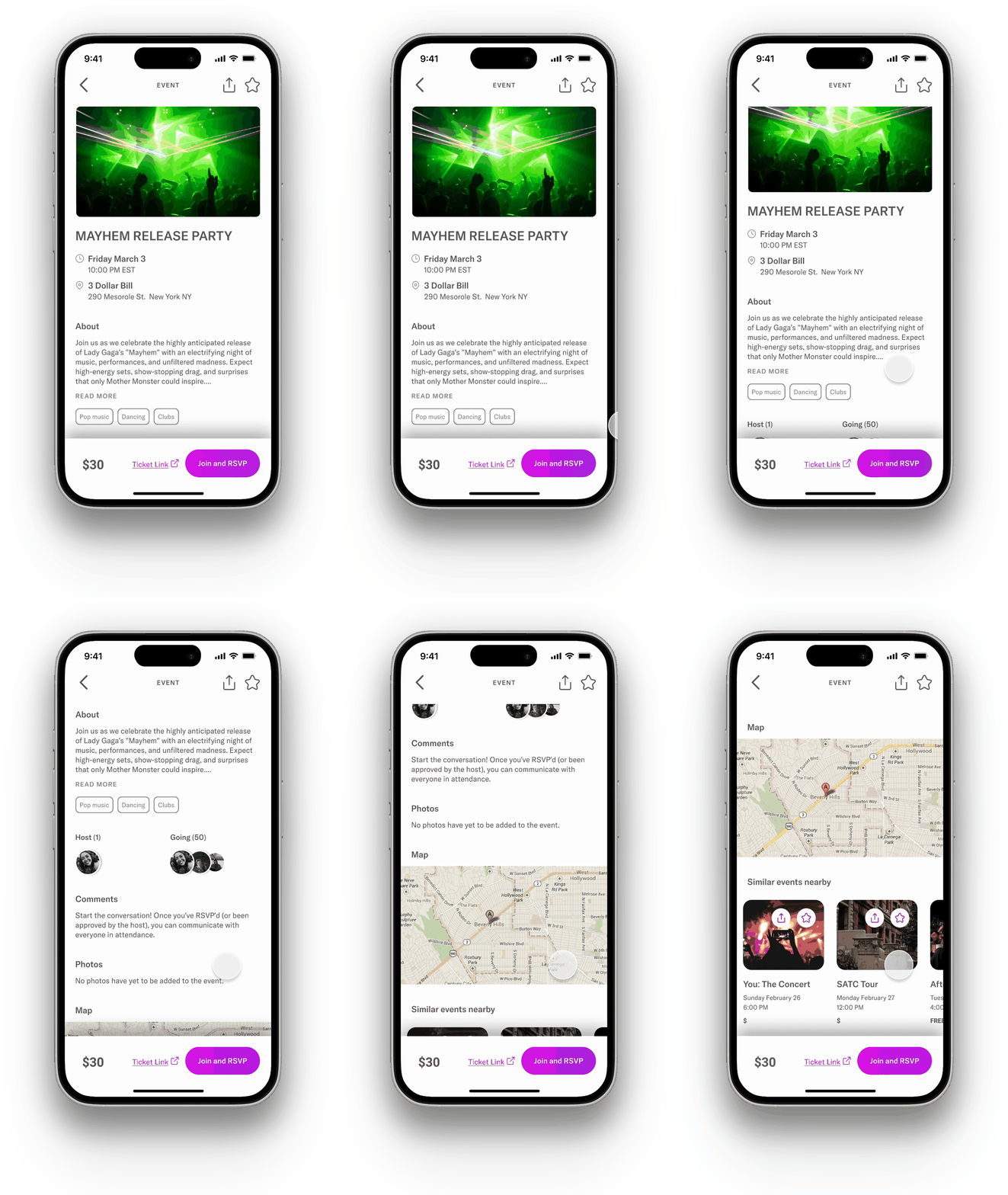
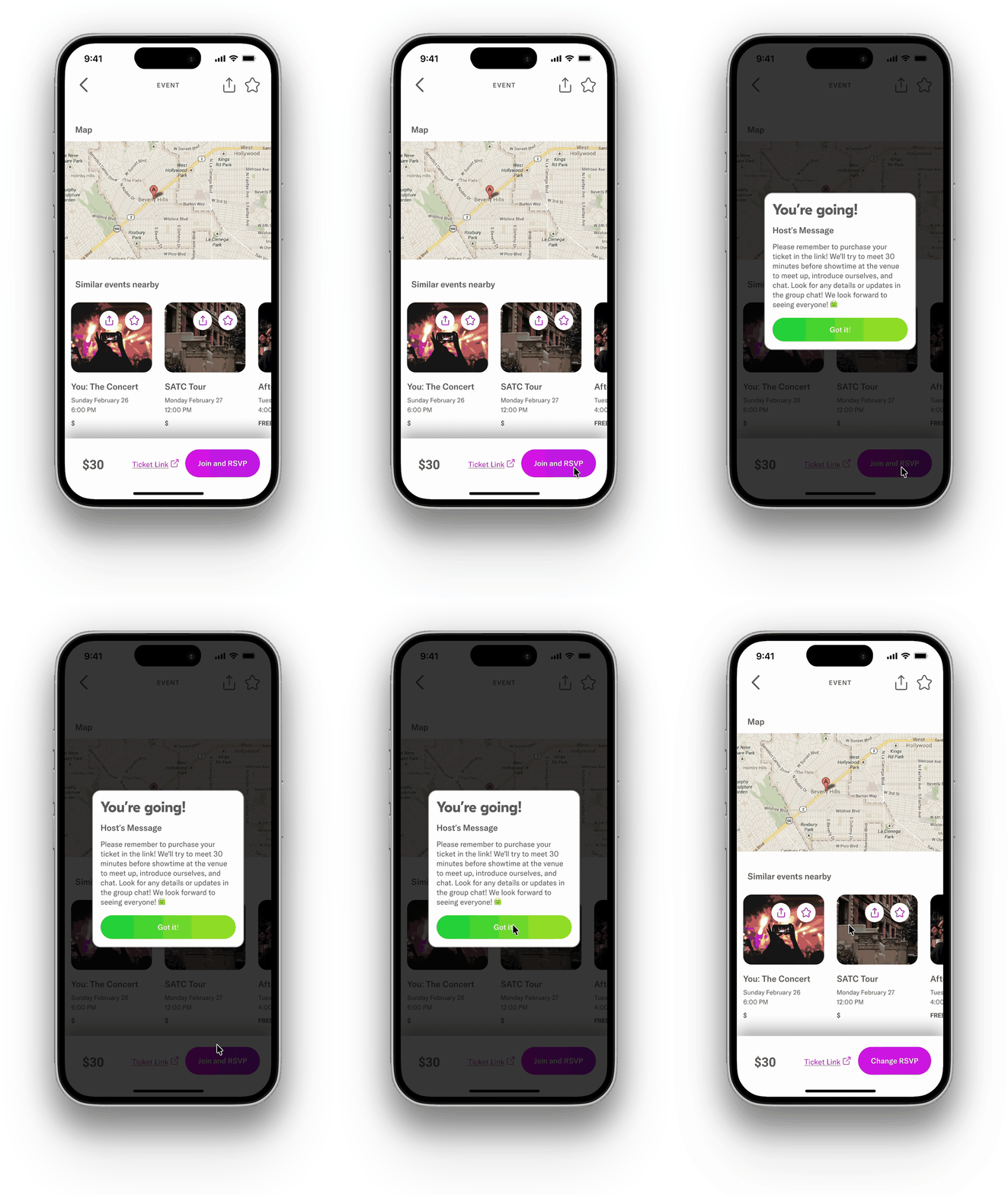
In response, I introduced an event ecosystem that allows users to discover, join, and organize community-driven activities.
Events Discovery screen
Events Discovery
Events Search screen
Events Search
Event Details screen
Event Details
Event RSVP screen
Event RSVP
Events create additional pathways for connection while reducing the pressure often associated with direct messaging strangers.
Reflection and Next Steps
Feedback and Iterations
Usability testing gave me plenty of insights into the users' existing mental models on how they prefer to navigate and browse existing social apps, as well as their concerns over data selling and precise locations, which led to some important UI design changes.
Key Design Decisions
Before
After
Browse screen before usability testing
Browse screen after usability testing

1. Users Expected Browse to Behave Like a Social Feed

Testers were consistently confused by the 'Browse' label with the search icon, and approached QFF with expectations shaped by the social feeds of modern social products like Instagram, TikTok, Tinder, and Bumble. Several users interpreted the browsing experience as a feed rather than a filtering tool. This revealed a mismatch between my information architecture and users' existing mental models; thus to reduce cognitive load, I repositioned 'Browse' as the primary 'Home' experience and moved search into a secondary filtering function.

Before
After
Events screen before usability testing
Events screen after usability testing

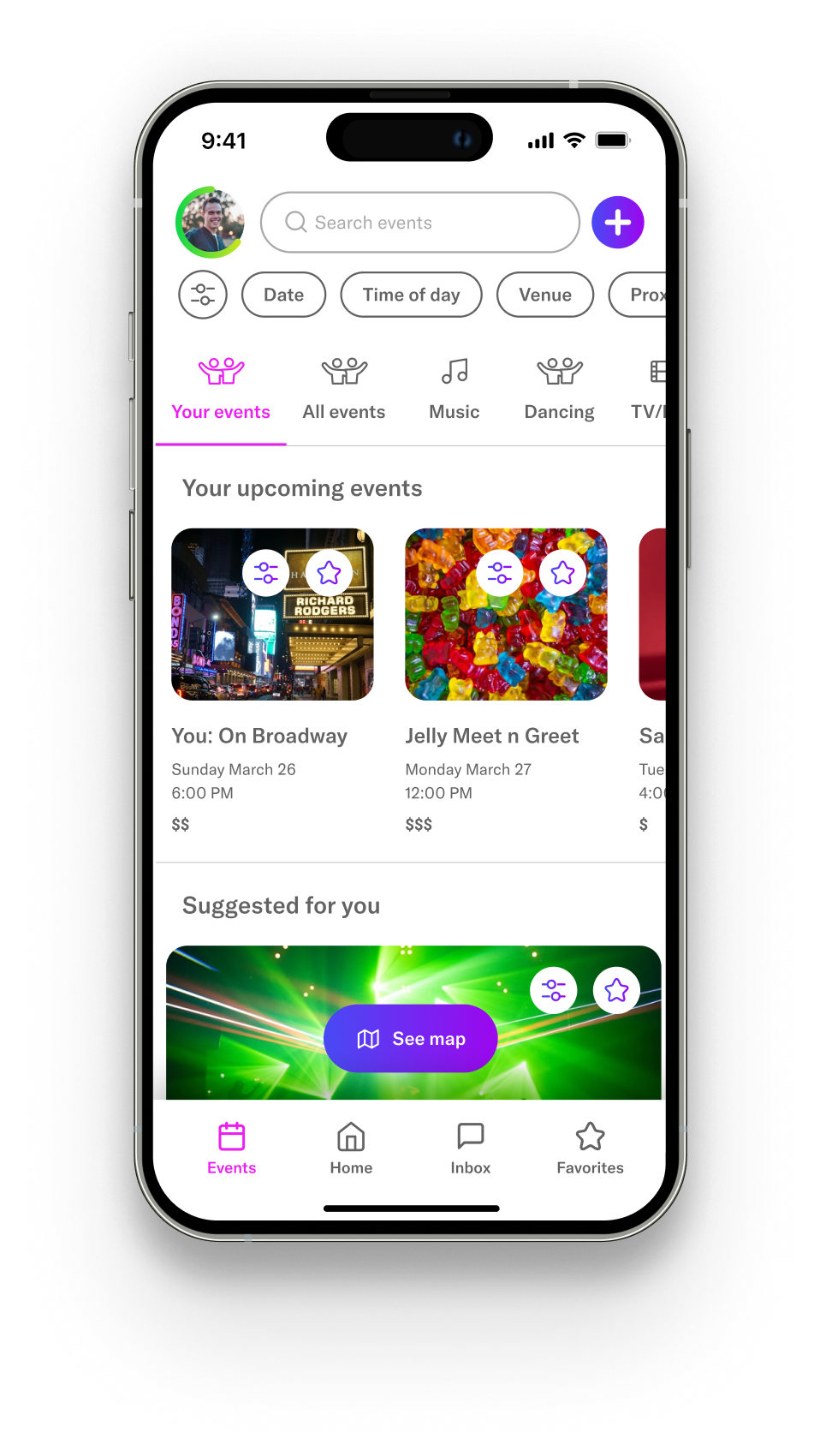
5. Users Assumed Events Were Personalized

Participants naturally assumed event listings were personalized recommendations. Rather than correcting this assumption, I leaned into it by introducing a dedicated "Suggested For You" section that explicitly communicates algorithmic recommendations while separating them from events users have already joined. I also added the + button at the top to indicate how users could create new events within the community-based ecosystem.

Designing QFF taught me how emotional and social dynamics influence product behavior — especially in communities where existing platforms have created fatigue, distrust, or exclusion.

This project reinforced the importance of designing for emotional safety, validating assumptions through testing, balancing identity expression with simplicity, and designing systems that encourage long-term engagement.
  • Selected Works
  • About Me
  • Contact